Mobility Sync
Mobility Sync is a platform concept aimed at simplifying global mobility operations by consolidating fragmented tools into a unified case management system. The screens were created as conceptual mockups to communicate findings and facilitate discussions with the client.
Enterprise - Global Business Services
2025
Deliverables:
UX Research
UX Research
Design concepts
Design concepts
Role & Duration:
UX Research Lead
UX Research Lead
4 months
4 months

Context
Based on discovery workshops with Global Mobility and Tax teams, the project defined the requirements for a centralised platform supporting the lifecycle of international assignments. The goal was to replace fragmented tools and email-based coordination with a unified system for case management, documentation, payments, and reporting.
Context
Based on discovery workshops with Global Mobility and Tax teams, the project defined the requirements for a centralised platform supporting the lifecycle of international assignments. The goal was to replace fragmented tools and email-based coordination with a unified system for case management, documentation, payments, and reporting.
Context
Based on discovery workshops with Global Mobility and Tax teams, the project defined the requirements for a centralised platform supporting the lifecycle of international assignments. The goal was to replace fragmented tools and email-based coordination with a unified system for case management, documentation, payments, and reporting.
Requirements
Through analysis and stakeholder interviews, we identified several key requirements: • Centralised case management to track assignments, tasks, and responsibilities across teams • Structured workflows to guide consultants through assignment phases and reduce manual coordination • Integrated payments tracking for tax equalisation, allowances, and reimbursements • Document and signature management for contracts and compliance documentation • Reporting and dashboards to improve visibility for managers and audit teams.
Requirements
Through analysis and stakeholder interviews, we identified several key requirements: • Centralised case management to track assignments, tasks, and responsibilities across teams • Structured workflows to guide consultants through assignment phases and reduce manual coordination • Integrated payments tracking for tax equalisation, allowances, and reimbursements • Document and signature management for contracts and compliance documentation • Reporting and dashboards to improve visibility for managers and audit teams.
Requirements
Through analysis and stakeholder interviews, we identified several key requirements: • Centralised case management to track assignments, tasks, and responsibilities across teams • Structured workflows to guide consultants through assignment phases and reduce manual coordination • Integrated payments tracking for tax equalisation, allowances, and reimbursements • Document and signature management for contracts and compliance documentation • Reporting and dashboards to improve visibility for managers and audit teams.

UX Concept
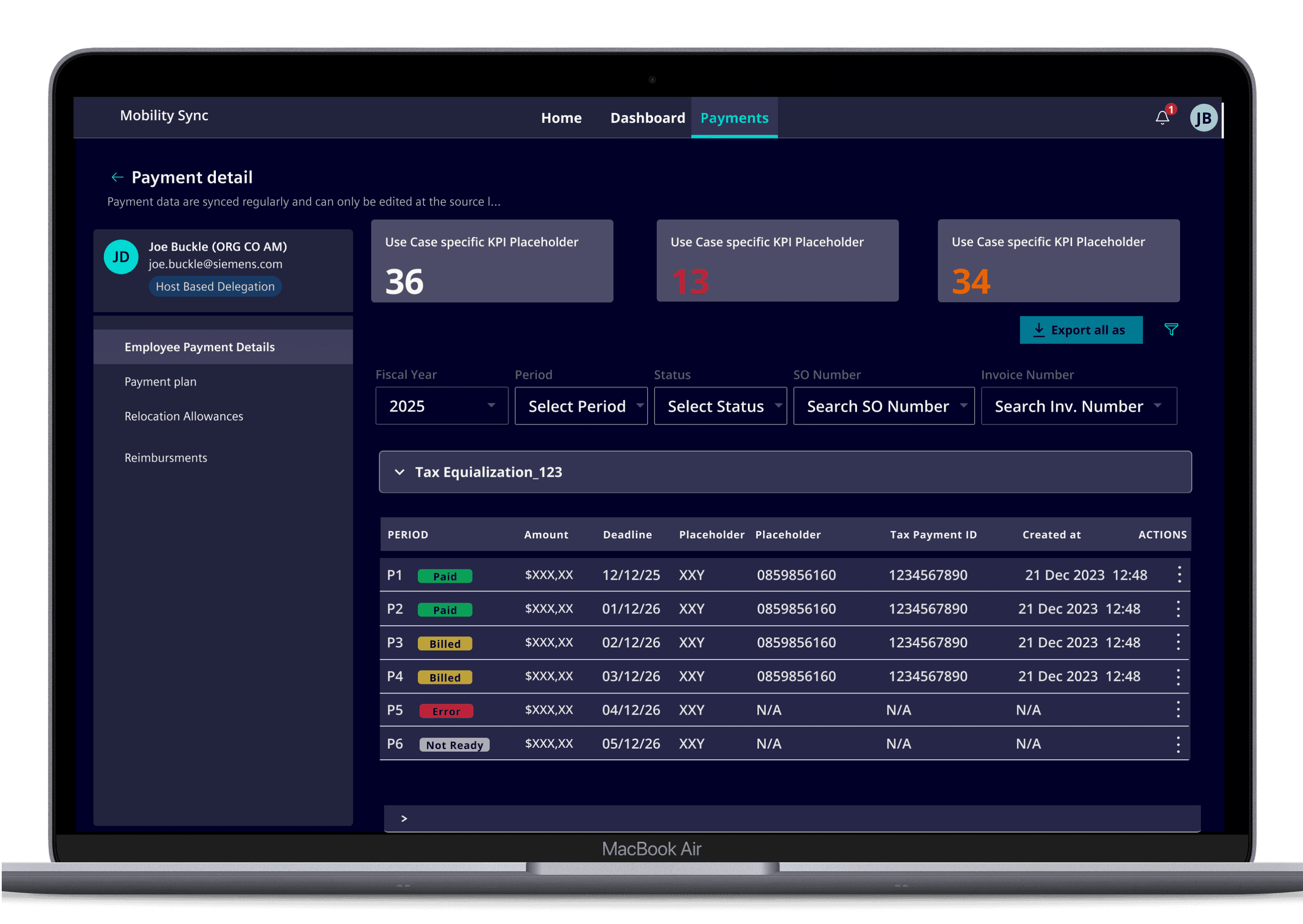
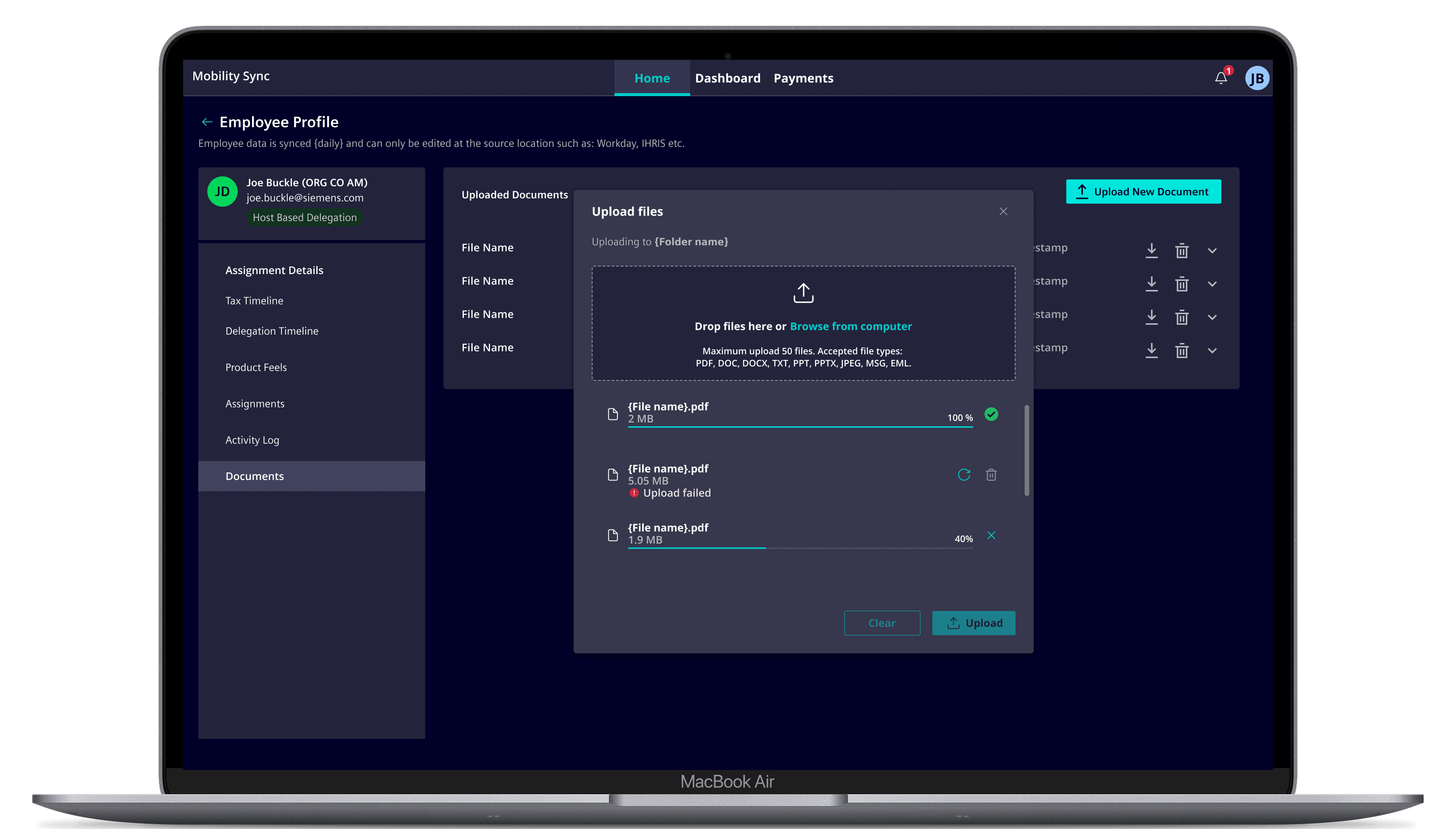
The UX research & design focused on simplifying complex global mobility processes and making case progress visible at a glance. The interface was structured around three core areas: • Case management overview: A dashboard enabling consultants to monitor multiple assignments simultaneously, showing key metrics such as open cases, updates, and deadlines. • Employee case profile: A structured view of a single assignment including employee data, tax information, visa details, and documentation. • Assignment phase tracking: A visual timeline showing the progress of each assignment phase, helping consultants coordinate tasks and identify next steps. The design emphasised clear hierarchy, scannable data tables, and visual status indicators to reduce cognitive load when managing large numbers of cases.
UX Concept
The UX research & design focused on simplifying complex global mobility processes and making case progress visible at a glance. The interface was structured around three core areas: • Case management overview: A dashboard enabling consultants to monitor multiple assignments simultaneously, showing key metrics such as open cases, updates, and deadlines. • Employee case profile: A structured view of a single assignment including employee data, tax information, visa details, and documentation. • Assignment phase tracking: A visual timeline showing the progress of each assignment phase, helping consultants coordinate tasks and identify next steps. The design emphasised clear hierarchy, scannable data tables, and visual status indicators to reduce cognitive load when managing large numbers of cases.
UX Concept
The UX research & design focused on simplifying complex global mobility processes and making case progress visible at a glance. The interface was structured around three core areas: • Case management overview: A dashboard enabling consultants to monitor multiple assignments simultaneously, showing key metrics such as open cases, updates, and deadlines. • Employee case profile: A structured view of a single assignment including employee data, tax information, visa details, and documentation. • Assignment phase tracking: A visual timeline showing the progress of each assignment phase, helping consultants coordinate tasks and identify next steps. The design emphasised clear hierarchy, scannable data tables, and visual status indicators to reduce cognitive load when managing large numbers of cases.

UX Rationale
Several design principles guided the interface: • Maintain context while filtering: A slide-in filter panel allows users to refine results without losing visibility of the case list. • Reflect real-world workflows: Filters and data groupings mirror the structure used by Global Mobility teams (e.g., assignment phase, tax activity, priority). • Support task execution, not just monitoring: Task lists and expandable steps allow consultants to manage actions directly within the case view.
UX Rationale
Several design principles guided the interface: • Maintain context while filtering: A slide-in filter panel allows users to refine results without losing visibility of the case list. • Reflect real-world workflows: Filters and data groupings mirror the structure used by Global Mobility teams (e.g., assignment phase, tax activity, priority). • Support task execution, not just monitoring: Task lists and expandable steps allow consultants to manage actions directly within the case view.
UX Rationale
Several design principles guided the interface: • Maintain context while filtering: A slide-in filter panel allows users to refine results without losing visibility of the case list. • Reflect real-world workflows: Filters and data groupings mirror the structure used by Global Mobility teams (e.g., assignment phase, tax activity, priority). • Support task execution, not just monitoring: Task lists and expandable steps allow consultants to manage actions directly within the case view.

Outcome
The research revealed that the full Mobility Sync concept was too complex to develop as a single project. By surfacing this early, we were able to scope the future product more realistically and identify a more manageable path forward.
Outcome
The research revealed that the full Mobility Sync concept was too complex to develop as a single project. By surfacing this early, we were able to scope the future product more realistically and identify a more manageable path forward.
Outcome
The research revealed that the full Mobility Sync concept was too complex to develop as a single project. By surfacing this early, we were able to scope the future product more realistically and identify a more manageable path forward.